This is the first post on the Sonaura blog. We picked March 3rd - World Hearing Day - to start writing, and the timing felt right. Here's why this day matters, and why we care.
What Is World Hearing Day?
World Hearing Day is an annual campaign organized by the World Health Organization. It's been observed every March 3rd since 2007, when it started as International Ear Care Day. In 2016, WHO renamed it to World Hearing Day to reflect a broader focus on hearing health as a public health priority.
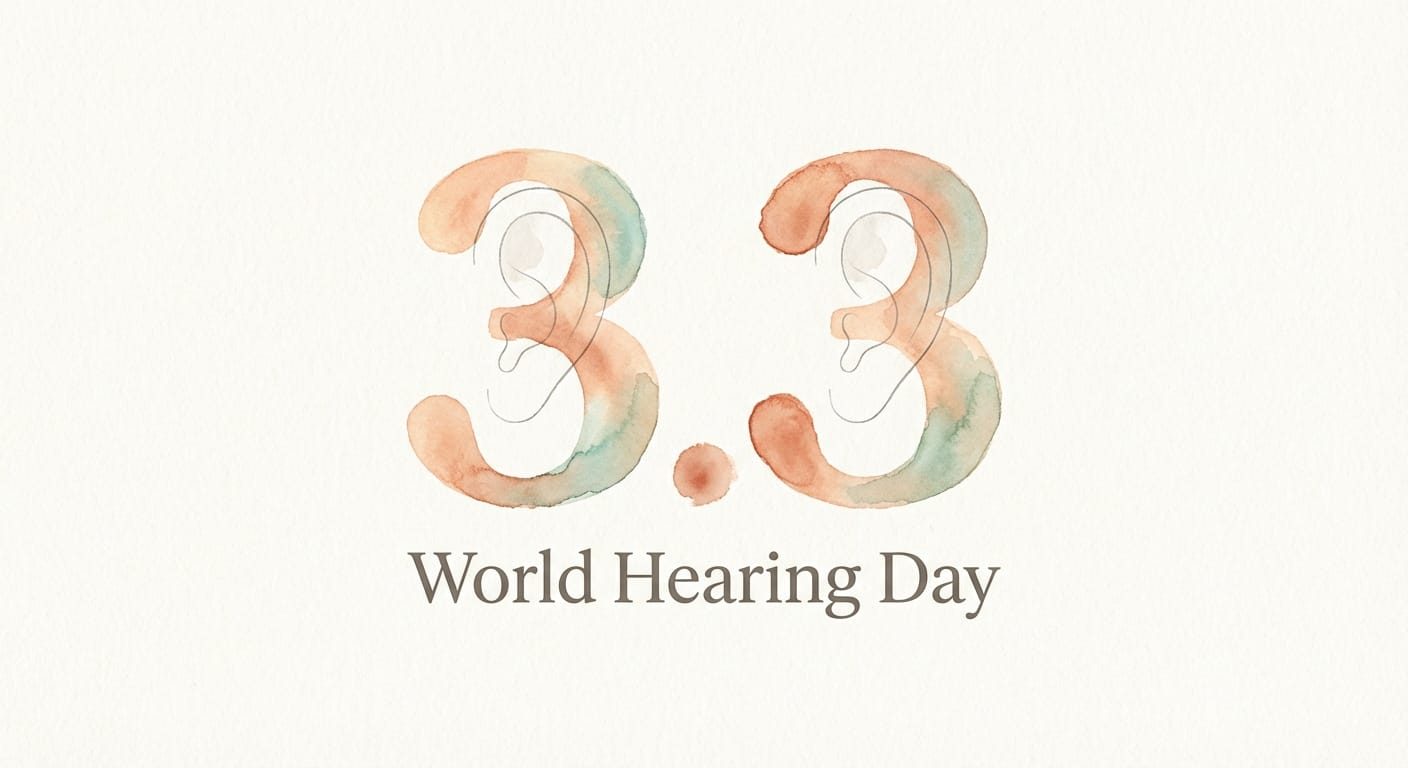
The date itself has a nice touch - 3.3 was chosen because the two threes look like a pair of ears.
Each year the campaign picks a theme. This year it's "From communities to classrooms: hearing care for all children." The focus is on childhood hearing loss - about 90 million children and adolescents worldwide live with some form of hearing loss, and over 60% of those cases are preventable through basic public health measures. That's a staggering number.
But World Hearing Day isn't just about children. It's a reminder for all of us - adults included - that hearing health deserves the same attention we give to vision, dental care, or mental health. It just doesn't get it yet.
Why This Matters for the Tinnitus Community
Tinnitus sits at a strange intersection of common and invisible. The numbers are hard to ignore - roughly 740 million adults worldwide have experienced tinnitus at some point. That's about 14% of the global population. More than 120 million people describe it as a serious, persistent problem.
And the trend isn't improving. Among younger adults (18 to 35), tinnitus prevalence has grown by nearly 40% over the past decade. The WHO reports that unsafe listening habits - earbuds at high volume, concerts without protection, noisy work environments - have increased by 25% since 2020.
Yet tinnitus remains one of those conditions that people often deal with alone. It doesn't show up on a scan. Friends and family can't hear it. Many doctors still say "you'll get used to it" and move on. The gap between how many people experience tinnitus and how much support is actually available - that gap is enormous.
World Hearing Day is one of the few moments each year when hearing health gets real public attention. For the tinnitus community, it's a chance to say: this is real, it matters, and millions of people are dealing with it right now.
You Don't Have to Figure This Out Alone
I have tinnitus. That's a big part of why Sonaura exists.
When it first started, the hardest part wasn't the ringing itself - it was not knowing what to do about it. Reading conflicting advice online. Getting a shrug from a doctor. Lying awake wondering if this is just how things are now.
What actually helped was finding other people who got it. Online forums, support groups, a friend who happened to have the same thing. Not because they had a magic fix - but because they had context. They'd already tried things. They could say "this helped me" or "that's normal, it gets easier." They made the whole thing feel less isolating.
That's what community does for people with tinnitus. It fills the gap that medicine often leaves open. It gives you information when your doctor doesn't have time. It gives you hope when you're running low.
Here's to Better Hearing
We're starting this blog because we want to be part of that. The tinnitus and hearing health community has given a lot to us - and we'd like to give something back.
If you're living with tinnitus, we hope you find people who understand. People who share what works for them and remind you that you're not dealing with this alone. Whatever that community looks like for you - a forum, a group, a friend - it's worth looking for.
Happy World Hearing Day.