Four out of five people who go to nightclubs experience ringing in their ears afterward. That's not a guess - it's what a 2025 RNID survey of 2,000 young adults (ages 18 to 28) found. And it gets worse: 58% of Gen Z respondents said they'd experienced hearing loss, tinnitus, or both after concerts, festivals, or club nights.
This isn't a distant risk. It's happening right now, every weekend, at every venue with a sound system pushing past safe levels. A separate international study published through Resident Advisor found that 73% of regular clubbers already have permanent hearing symptoms - tinnitus, sound sensitivity, or both.
When Ringing After a Concert Stops Being "Normal"
That buzzing or hum you hear after a loud night out has a clinical name - Temporary Threshold Shift. It means the hair cells inside your cochlea were overstressed by sound. Your brain tries to compensate for reduced input by cranking up its own activity, and you hear that as ringing.
Here's the part most people don't know: human hair cells don't regenerate. Unlike birds or amphibians, once ours are damaged, they're gone. Each episode of temporary tinnitus adds to the total wear. A 2024 RNID survey found that 78% of concertgoers had no idea that just 15 minutes at 100 decibels can cause permanent damage. Many believed they could safely listen without protection for up to four hours. They can't.
When temporary shifts happen often enough or intensely enough, they stop being temporary. The damage becomes a Permanent Threshold Shift - and the ringing stays.
Why This Hits Close to Home
I love music. All kinds - electronic, classical, jazz. I used to go to concerts constantly. And after every club night, I'd have that familiar hum in my ears - sometimes for a day, sometimes two. I never thought twice about it. Just a normal side effect of a good night out, right?
Now I know better. That "normal side effect" was my auditory system telling me it had just taken an acoustic hit. And through Sonaura, I talk to people with tinnitus regularly. Many of them trace it back to one specific night - a loud concert, a festival, a club where the bass was just too much. I've seen cases where the temporary ringing simply never went away.
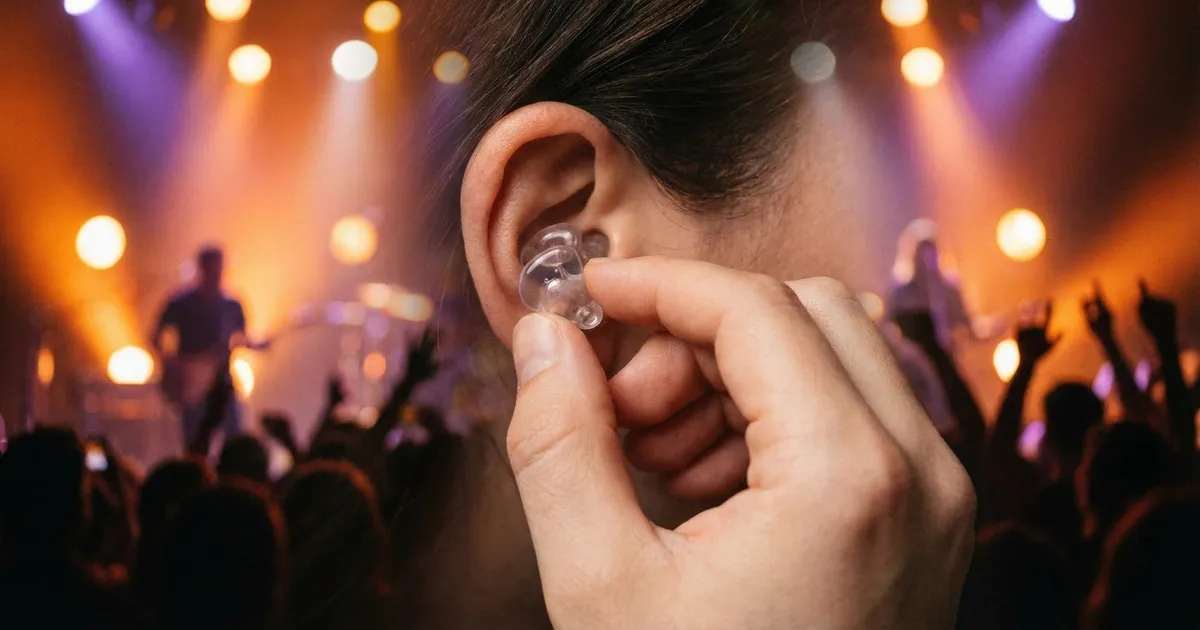
I'm not saying don't go to concerts. Music is too important for that. But I go differently now. I wear musician's earplugs - the kind that filter harmful frequencies without killing the sound quality. They're practically invisible. What surprised me was learning that most professional musicians already do this. Some started after developing tinnitus, like me. Others were just smart enough to listen to someone who warned them early.
If the pros protect their hearing, why shouldn't the rest of us?
Why Young People Ignore the Risk
The data on this is frustrating. According to RNID, 75% of young adults know that loud music can permanently damage their hearing. Yet 35% say they won't bother with ear protection this year.
When asked to rank festival essentials, earplugs came dead last - at 24%. Behind painkillers (37%), phone chargers (47%), sunscreen (50%), and rain jackets (51%). People will pack pills for a headache but won't protect themselves from a condition that could last the rest of their lives.
The reasons are predictable: social pressure, the "it won't happen to me" reflex, uncomfortable earplugs that muffle sound. About a quarter said they'd wear them if the earplugs didn't affect music quality. Another quarter - if they were more comfortable. Another quarter - if they were handed out free at the door.
What You Can Actually Do
None of this requires giving up live music. A few simple habits go a long way.
The 60/60 rule is a good starting point: keep volume under 60% and limit listening to 60 minutes before giving your ears a break. At events, take sound breaks - step outside or find a quieter area for a few minutes. The Resident Advisor study found 38% of clubbers already do this.
Musician's earplugs are the single best investment. They don't muffle sound like foam plugs - they filter it, preserving clarity while cutting harmful decibel levels. Modern pairs are small, comfortable, and nearly invisible.
Watch for warning signs after exposure. If ringing lasts more than 24 to 48 hours, see an audiologist. And get your hearing tested - only 13% of regular clubbers have done so in the past year.
As Franki Oliver, RNID's Audiology Manager, puts it: "Exposure to loud sound levels is one of the leading causes of hearing loss and tinnitus - but it's also one of the most preventable."
Many festivals now offer free disposable earplugs at the entrance. Ask for them. Your future self will thank you.