
Sonaura's mission is to make tinnitus relief accessible to everyone
Founder's Story
"I know what it's like - when doctors say "learn to live with it" but don't explain how"
At first, I didn't understand what was happening.
After COVID-19, I started hearing a noise in my ears. I felt off, but thought I was managing. It'll pass on its own, I told myself. The body will recover.
But it got worse. First, my sleep fell apart - I would wake up to silence, because in silence the noise became louder. Then the anxiety grew. I started listening to the sound, checking - is it quieter? Louder? What if it gets even worse?
I went to doctors. ENT. Neurologist. General practitioner. Tests, examinations, prescriptions. And in the end - the phrase that millions of people with tinnitus hear:
"You need to learn to live with it. How exactly - I don't know."
That's when it got really bad. Not because of the noise - but because of the feeling that there was no way out. That nobody knew how to help. That this was forever.
The Turning Point
I almost gave up.
Stopped looking for solutions. Stopped hoping. Just existed. And slowly faded away.
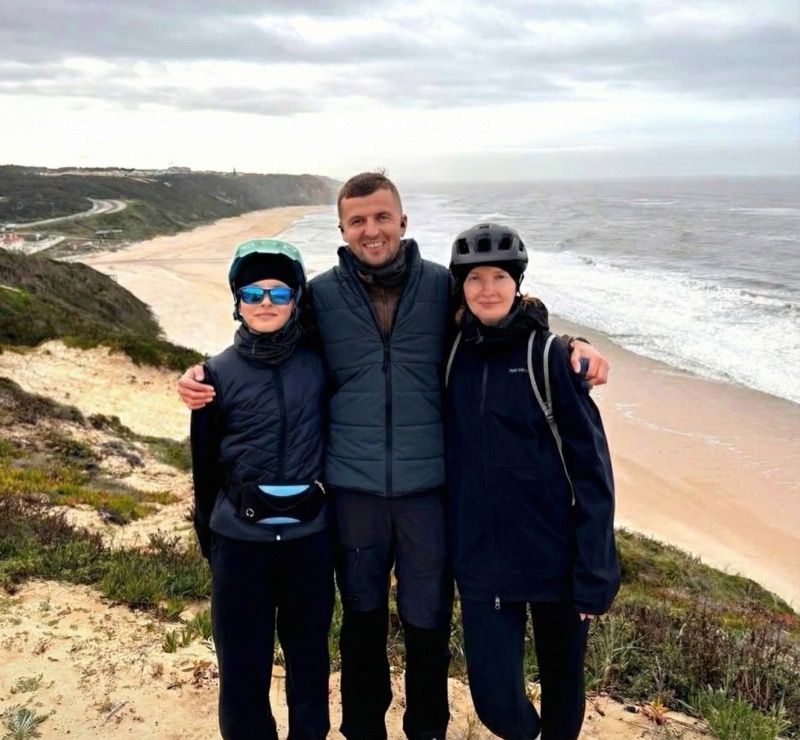
But one day, a realization came: I can't leave my family. I can't give up - for my wife, for my daughter.
I didn't know if it would work. But I decided to try one more time.
By that point, I thought I had tried everything. Doctors, medications, different approaches - nothing gave lasting results. But I sat down and analyzed: what haven't I tried yet? And I found one program I had read good reviews about but never got around to - MBSR, Mindfulness-Based Stress Reduction.
I started practicing. Without high expectations. Just doing what the book said. Every morning, every day, every evening.
At first - nothing. No changes.
And then I noticed: in those moments when I'm doing the practice, I feel relief. I relax. I shift my focus. The noise fades into the background.
And then it hit me:
"Relaxation and refocusing - it's a skill. And I can train it."
That was the turning point. I understood: from here on, everything depends on my willingness to put in the time. Not on doctors. Not on pills. On me.
Later I learned that science confirms this: mindfulness practices reduce tinnitus distress in the majority of clinical studies. Cognitive behavioral therapy is recognized as the most evidence-based method for working with tinnitus. This isn't esoteric - these are tools that work.
Where I Am Now
The noise didn't disappear. But it no longer runs my life.
I still hear it - sometimes. Not constantly. When I'm in silence or when someone asks about my condition - that's when I notice it.
But here's what changed: my brain no longer perceives this sound as a danger signal. No anxiety. No panic. No constant listening.
I perceive the noise as a normal physiological process. Like a heartbeat. Like breathing. It's there - and that's okay.
This doesn't mean I "gave in." It means I learned to live fully - with or without the sound.
Why I Created Sonaura
After going through this, I asked myself: why did I have to piece everything together on my own?
Facing tinnitus, I realized one thing: doctors only have fragmented knowledge, and they're limited by their specialization.
ENT looks at ears. Neurologist - at the nervous system. Therapist - at anxiety. But tinnitus is a complex, interdisciplinary condition. It affects hearing, the nervous system, mental health, sleep, work, relationships - everything at once.
Looking at tinnitus from a single specialty, you can't see the full picture. Which means - you can't build a system that actually works.
For over 15 years I've been building IT products. I developed a comprehensive vision for what a real tinnitus relief journey should look like. I know what approach is needed for lasting improvement - because I went through it myself. And because building products is my profession. Sonaura is not my first project, but perhaps my most important one.
I've assembled a circle of experts - top specialists in the field of tinnitus, with whom I validate hypotheses and consult. Sonaura combines evidence-based approaches: CBT, mindfulness, sound therapy, autonomic nervous system regulation - into one system you can follow every day.
Mission
Make tinnitus relief accessible to everyone.
Not a "magic pill" - that doesn't exist.
But a system. Clear, step-by-step, science-based. One that works - regardless whether you have direct access to a tinnitus specialist, where you live, or how much you can spend.
The brain can learn to tune out tinnitus.
Like any skill, it takes practice - and the right guidance.
I want these tools to be available not just to a few, but to everyone who needs them.
Who's Behind Sonaura
Behind the product is a team of developers and analysts, as well as a circle of expert consultants in audiology, neurology, and cognitive therapy - specialists with whom we validate every element of the program.
If you're in the place where I once was - know this:Relaxation and refocusing - it's a skill.It can be trained.I did it. And you can too.
Recovery is a process that requires your participation. 10-20 minutes a day and a willingness to follow the plan. If that sounds like you - start with an assessment.
Start the 10-minute check-up